There are more coaxial cable types in active service than any one engineer can keep straight. RG-58, RG-213, RG-8X, RG-142, RG-174, RG-316. LMR-100, 200, 240, 400, 600, 900, 1200. Andrew and CommScope Heliax in 1/4 inch, 1/2 inch, 7/8 inch, and 1-1/4 inch sizes, in both standard LDF and superflex FSJ flavours. Semi-rigid UT-141 and UT-085 for microwave assemblies. HUBER+SUHNER SUCOFLEX for phase-stable test leads. Each one is the right answer to one specific question, and the wrong answer to several others. Choosing between them on every job is slow, and getting it wrong costs power budget, system reliability, or money.
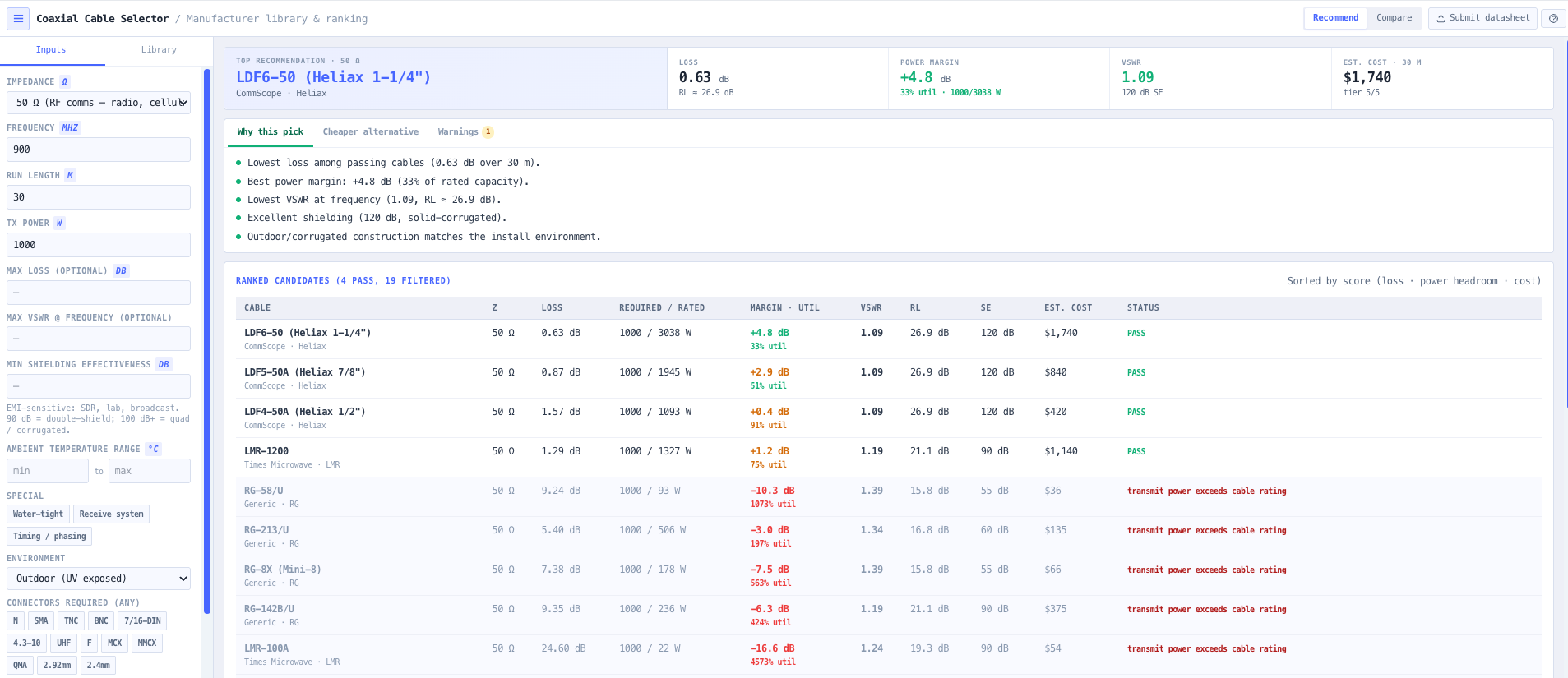
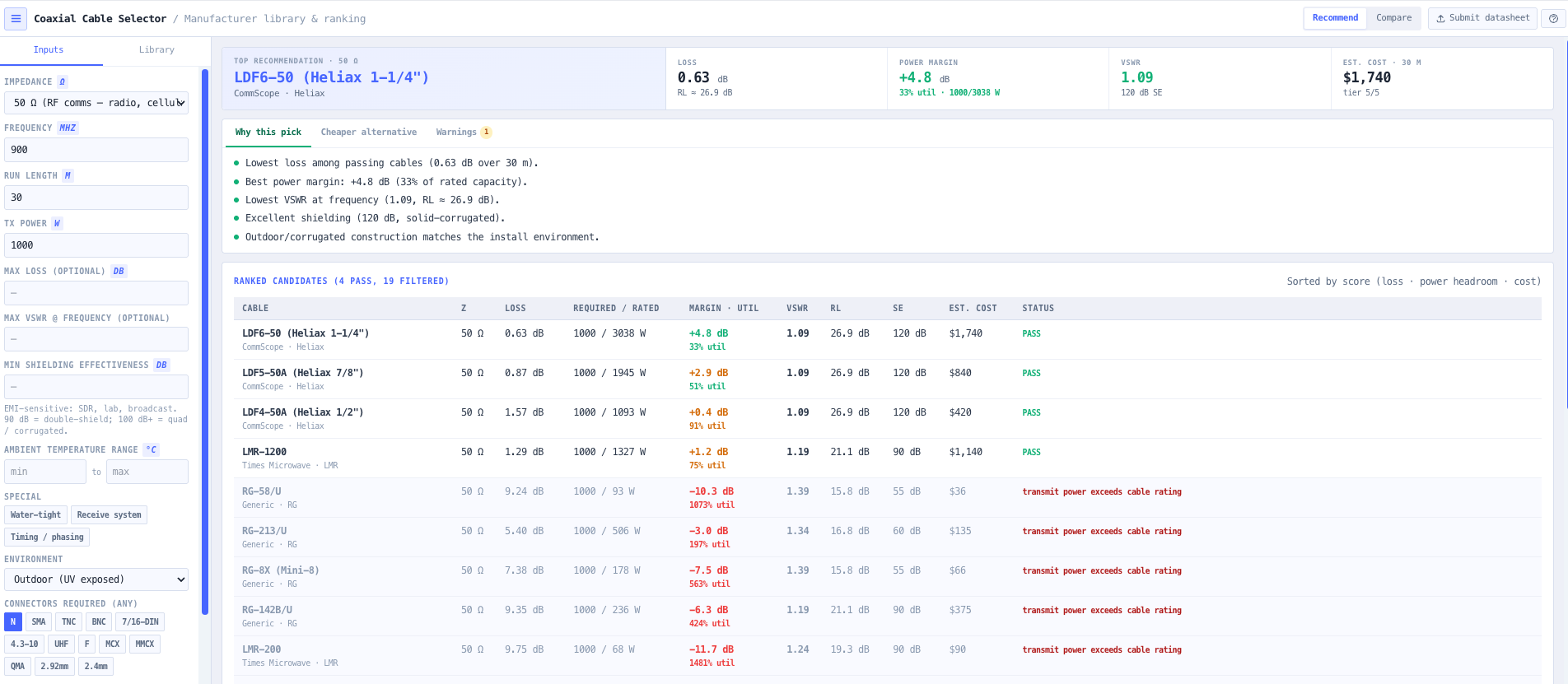
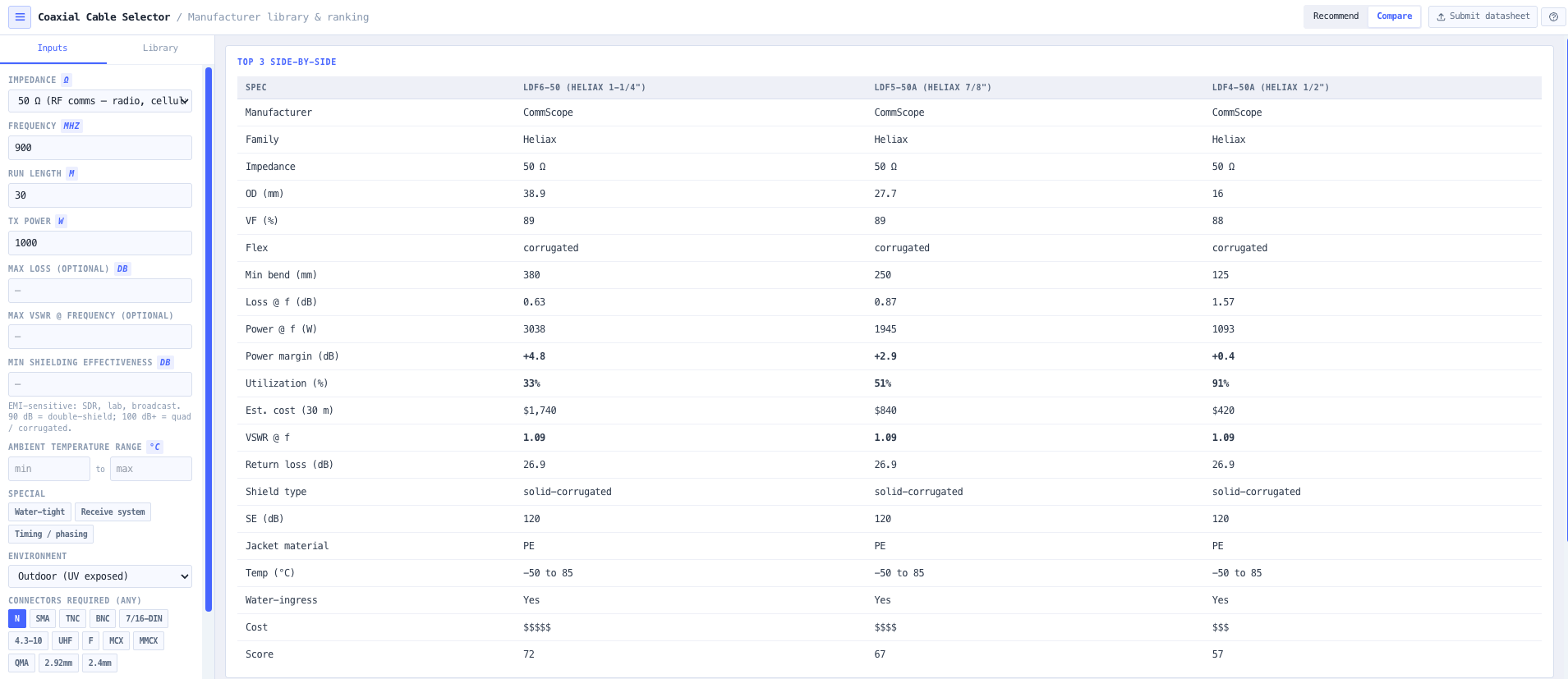
The noIM₃ Coaxial Cable Selector is a precision picker for that decision. Enter the operating frequency, the run length, the transmit power, and the constraints that apply to the installation: which connectors you can terminate, whether the cable will see UV or burial or plenum, how flexible it needs to be, and how much money is on the table. The tool interpolates each candidate cable's datasheet attenuation curve on a log-log axis at your frequency, multiplies by length to get total loss, interpolates the power-handling curve at the same frequency, applies a sensible derating for outdoor and buried environments, and then filters and scores everything that survives.
The library is curated from published manufacturer datasheets. Times Microwave LMR-100 through LMR-1200. CommScope Heliax LDF4-50A, LDF5-50A, LDF6-50, and the FSJ superflex family. HUBER+SUHNER SUCOFLEX 104. Generic mil-spec RG-58, RG-213, RG-8X, RG-142, RG-174, RG-316, and UT-141 semi-rigid. Each entry carries the full datasheet attenuation and power-handling curves, jacket ratings, shielding details, connector compatibility, and a cost tier. If your cable isn't in the library, the tool accepts a datasheet PDF submission. Once reviewed and verified, your submission is merged into the shared library for every user.