Overview
What the Adjacent Channel Interference Ratio Calculator does
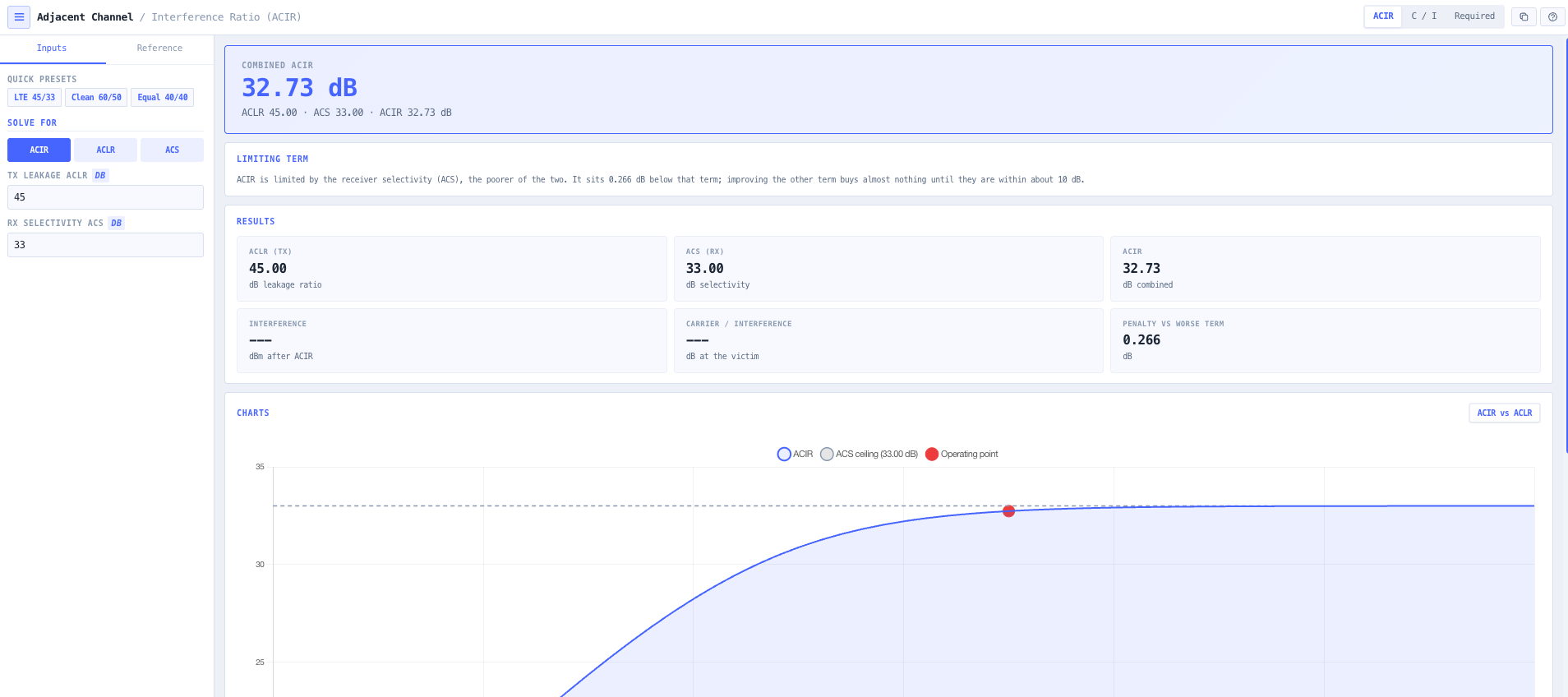
When two radio systems sit on adjacent channels, whether two operators at a shared site or two carriers in a tight channel plan, they interfere even though they are on different frequencies. Two imperfections combine to cause it. The transmitter leaks some power into the adjacent channel, measured by its Adjacent Channel Leakage Ratio (ACLR). The receiver cannot perfectly reject the adjacent channel, measured by its Adjacent Channel Selectivity (ACS). Together they set the Adjacent Channel Interference Ratio (ACIR), the single figure that governs how much an adjacent transmitter degrades a victim receiver.
Read the full overview
The two combine as reciprocals, the way parallel resistances do: 1/ACIR = 1/ACLR + 1/ACS. Because of that, the ACIR is always a little worse than the poorer of the two, and once one is more than about 10 dB better than the other, the poorer one sets the result almost entirely. Cleaning up a transmitter buys nothing if the receiver is the limit, and vice versa. Getting this right is the difference between a coordination that works and one that does not.
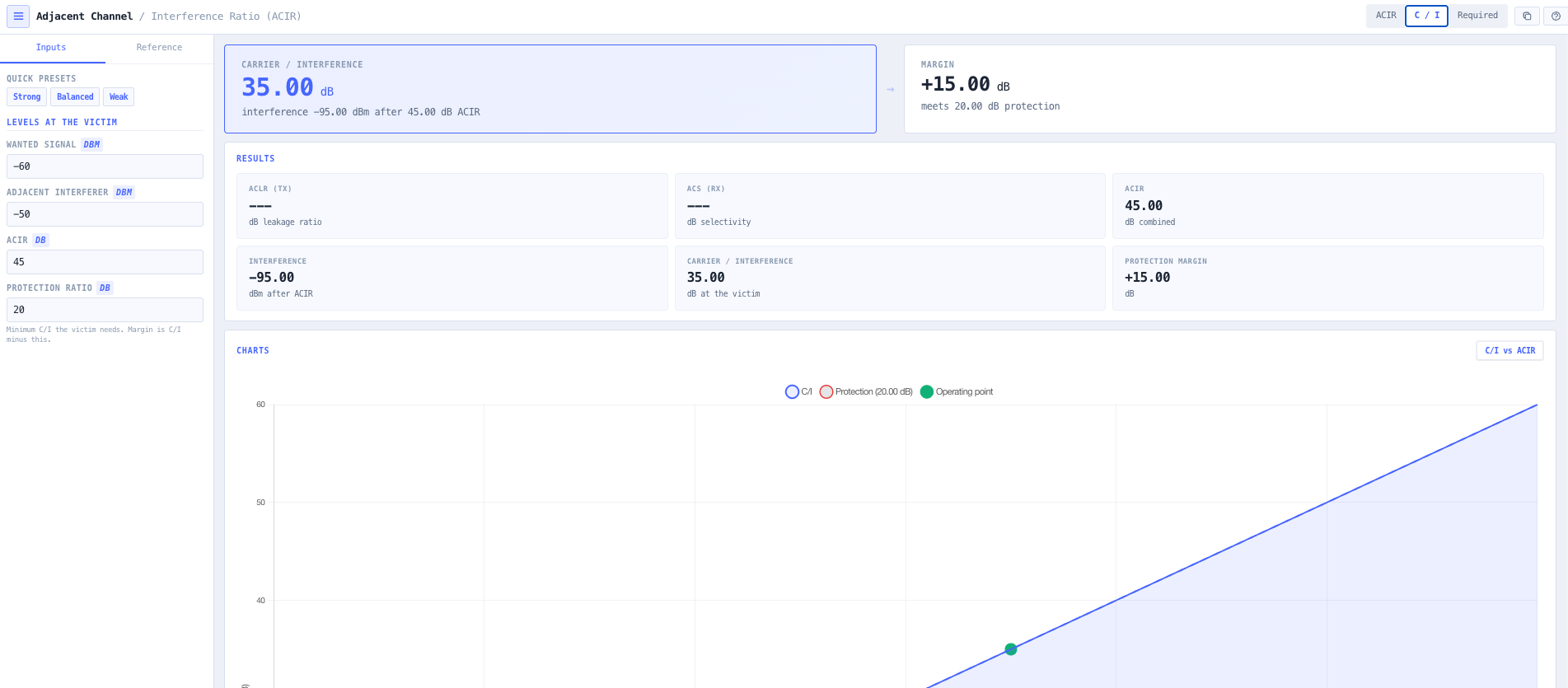
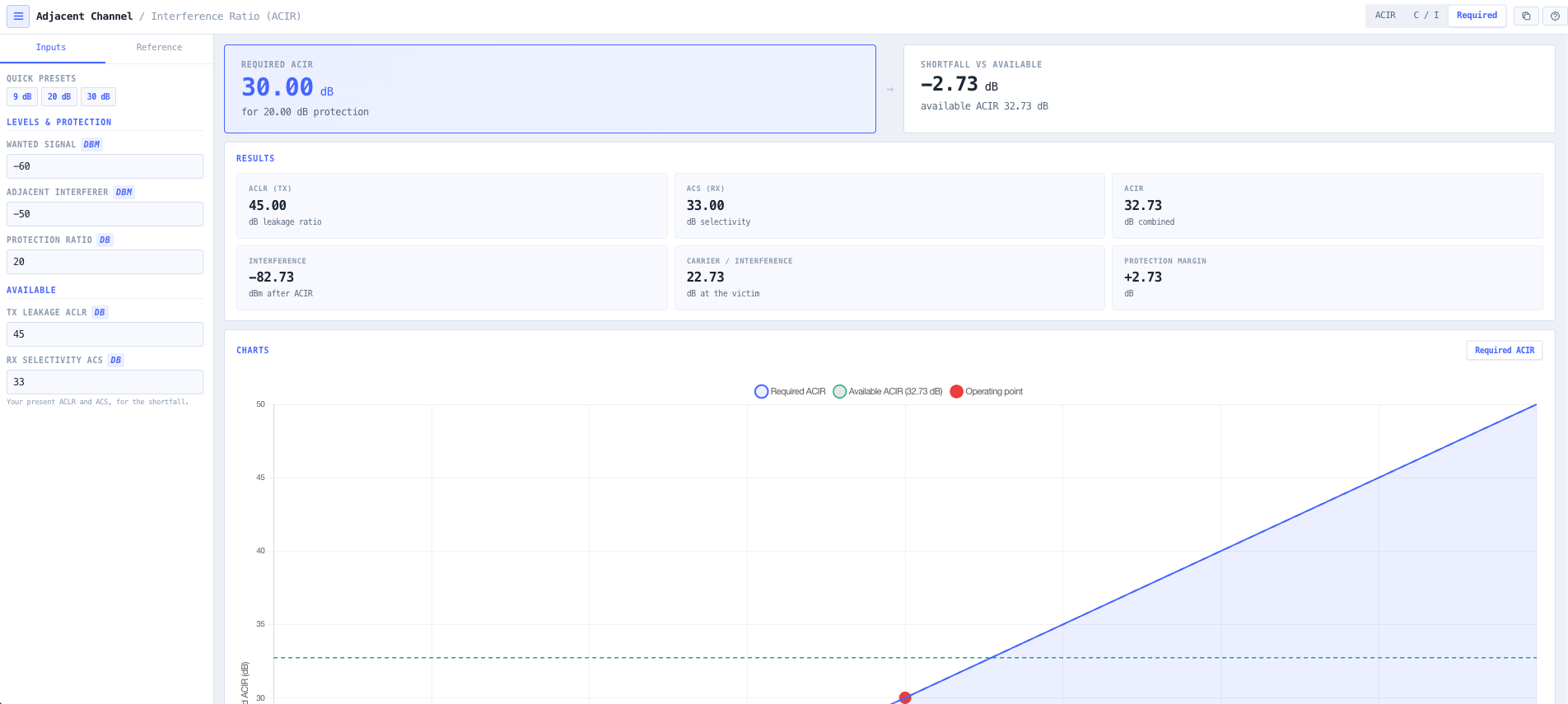
The noIM3 Adjacent Channel Interference Ratio Calculator is built for the systems integrator doing that coordination, not the chipset designer. Combine an ACLR and an ACS into the ACIR and see which term limits it. Take the wanted and interferer levels at a victim receiver and get the carrier-to-interference ratio and the margin against a protection ratio. Or start from the protection ratio the victim needs and get the ACIR required, with the shortfall against the ACLR and ACS you actually have, so you know how much filtering or guard band to add.