System Capacity Design

LMR Trunked System Planner

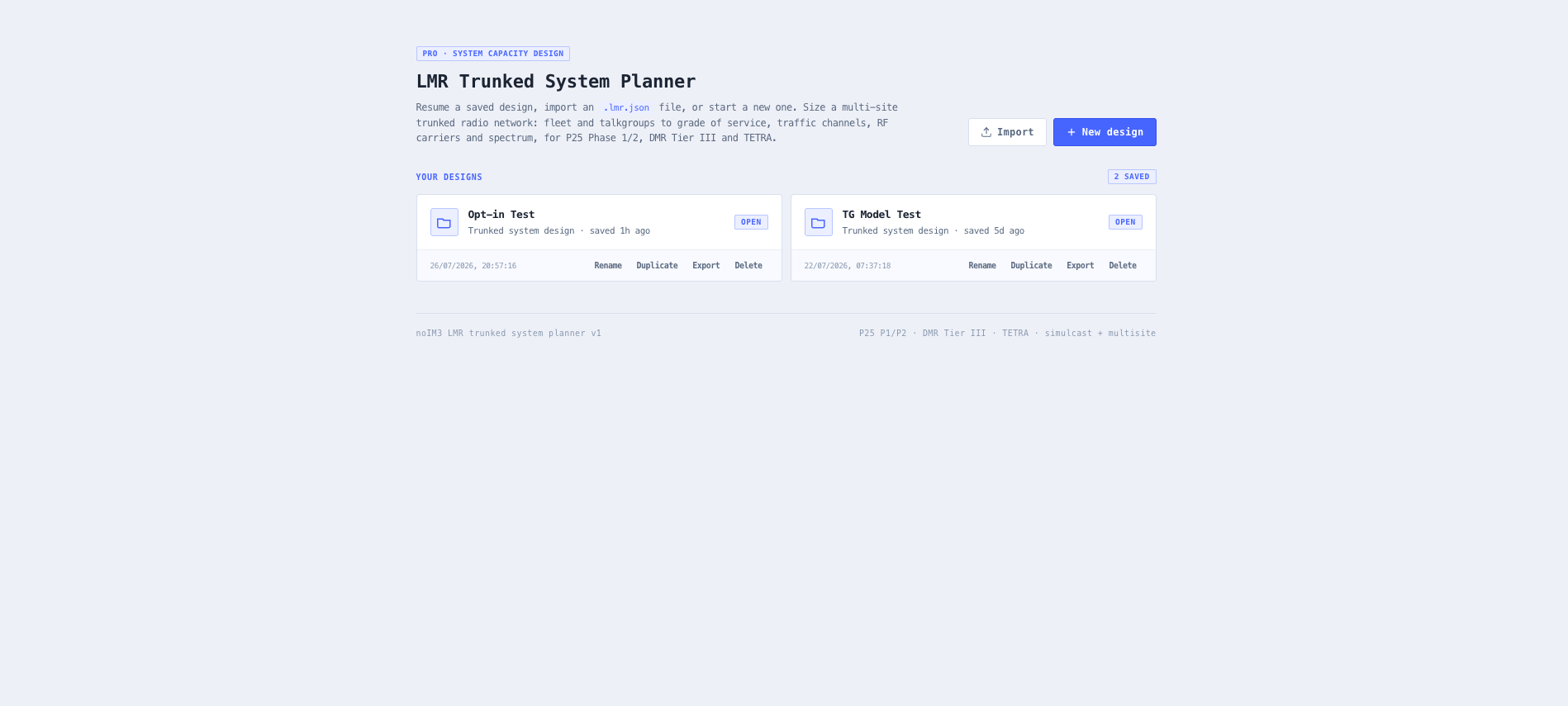
Multi site trunked radio capacity design that ties talkgroups, grade of service, channel count, RF carriers, spectrum and site loading together for P25 Phase 1 and 2, DMR Tier III and TETRA.

Included in the 14-day Pro trial on every new account. No credit card.

Overview

A raw Erlang calculator answers one question: given so many Erlangs of offered traffic and a grade of service target, how many channels? Designing a real trunked land mobile radio network needs the questions around that answer joined up. How much traffic does a fleet of talkgroups actually generate? What grade of service matters when call grants queue rather than clear? How do the required channels become RF carriers and licensed spectrum for the technology in question? And how does all of that distribute across a multi site network. The LMR Trunked System Planner is the layer that ties talkgroups, grade of service, channel count, carriers, spectrum and site loading together, sitting on top of the Erlang B and C engines rather than duplicating them.

Offered traffic is built the way trunked radio actually behaves. Members drive a busy hour push to talk rate, and a group transmission occupies a single traffic channel however many members are listening, so traffic scales with the arrival rate rather than the group size. Transmission trunking releases the channel between overs; message trunking holds it through the inter over dead air for the whole conversation, and the tool models the difference explicitly. The channel pool is then sized against the grade of service that matters for a queued system: an Erlang C access time target, the probability that a grant is served within a target number of seconds, with Erlang B blocking available for message trunked or no queue systems.

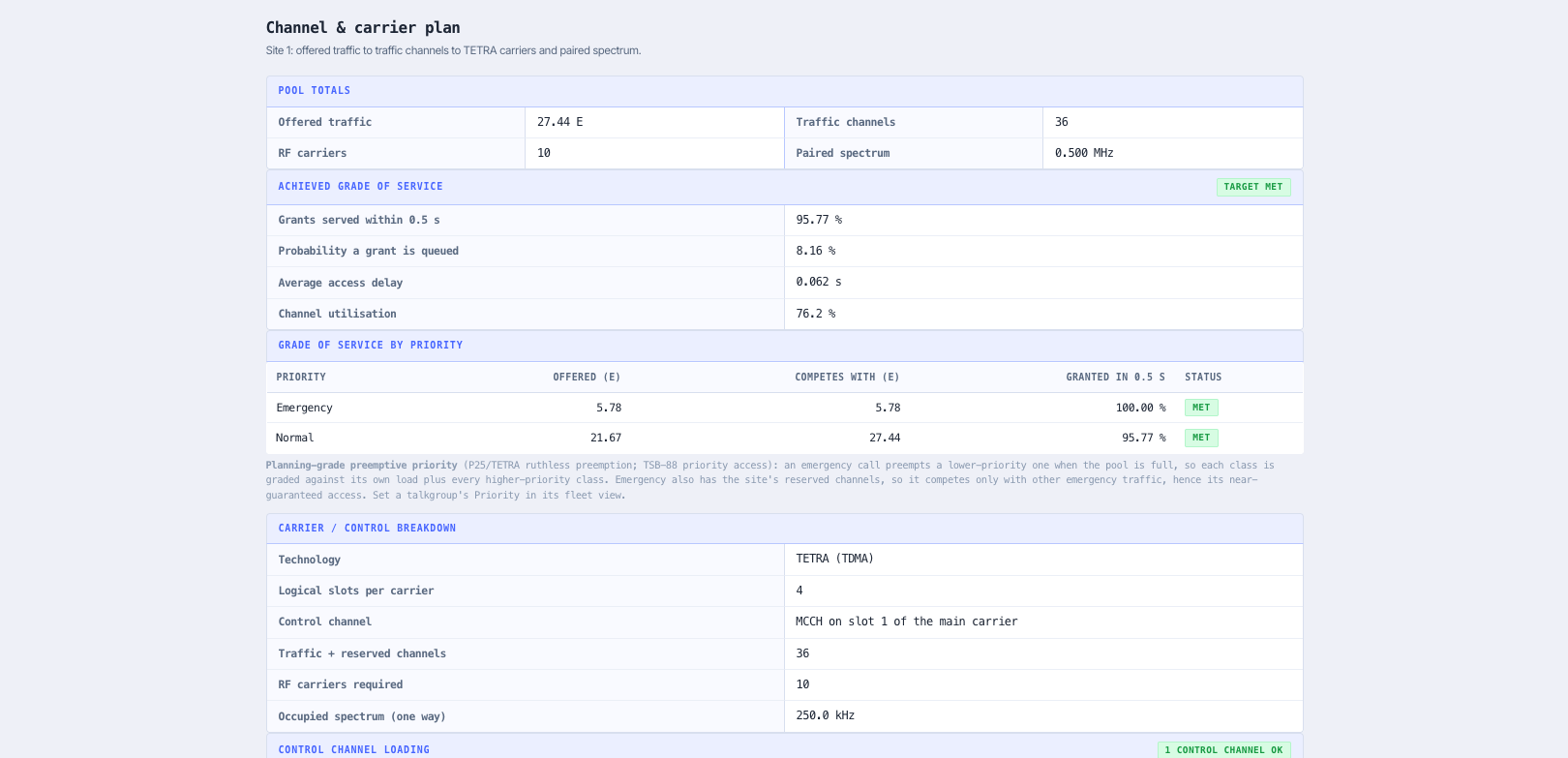
From the channel requirement the planner produces a deployable answer. It maps traffic channels onto physical RF carriers and paired transmit and receive spectrum for P25 Phase 1 FDMA, P25 Phase 2 TDMA, DMR Tier III and TETRA, accounting for the control channel each technology carries. Across a network it separates independent multisite cells, each sized on its own traffic and needing its own frequencies, from simulcast pools that are sized once on the combined traffic of their member sites and reuse one carrier set everywhere. The roll up distinguishes the distinct frequencies to licence from the carriers physically deployed, flags the worst loaded site, compares the four technologies for the same channel requirement, and runs a growth analysis that reports the extra channels needed at a horizon and the years of runway before the current plan breaches its grade of service.
Capabilities

Fleet driven traffic model

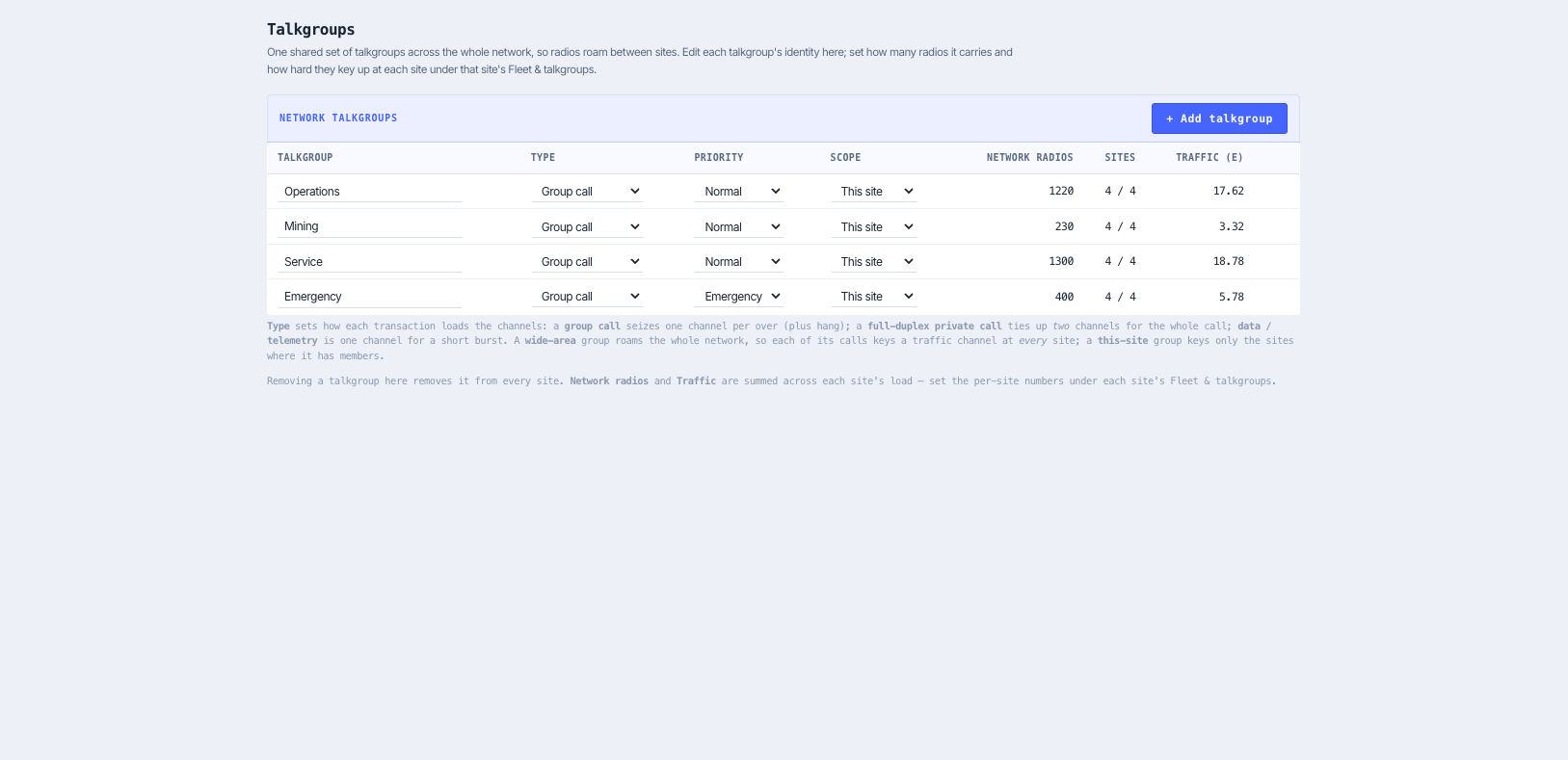
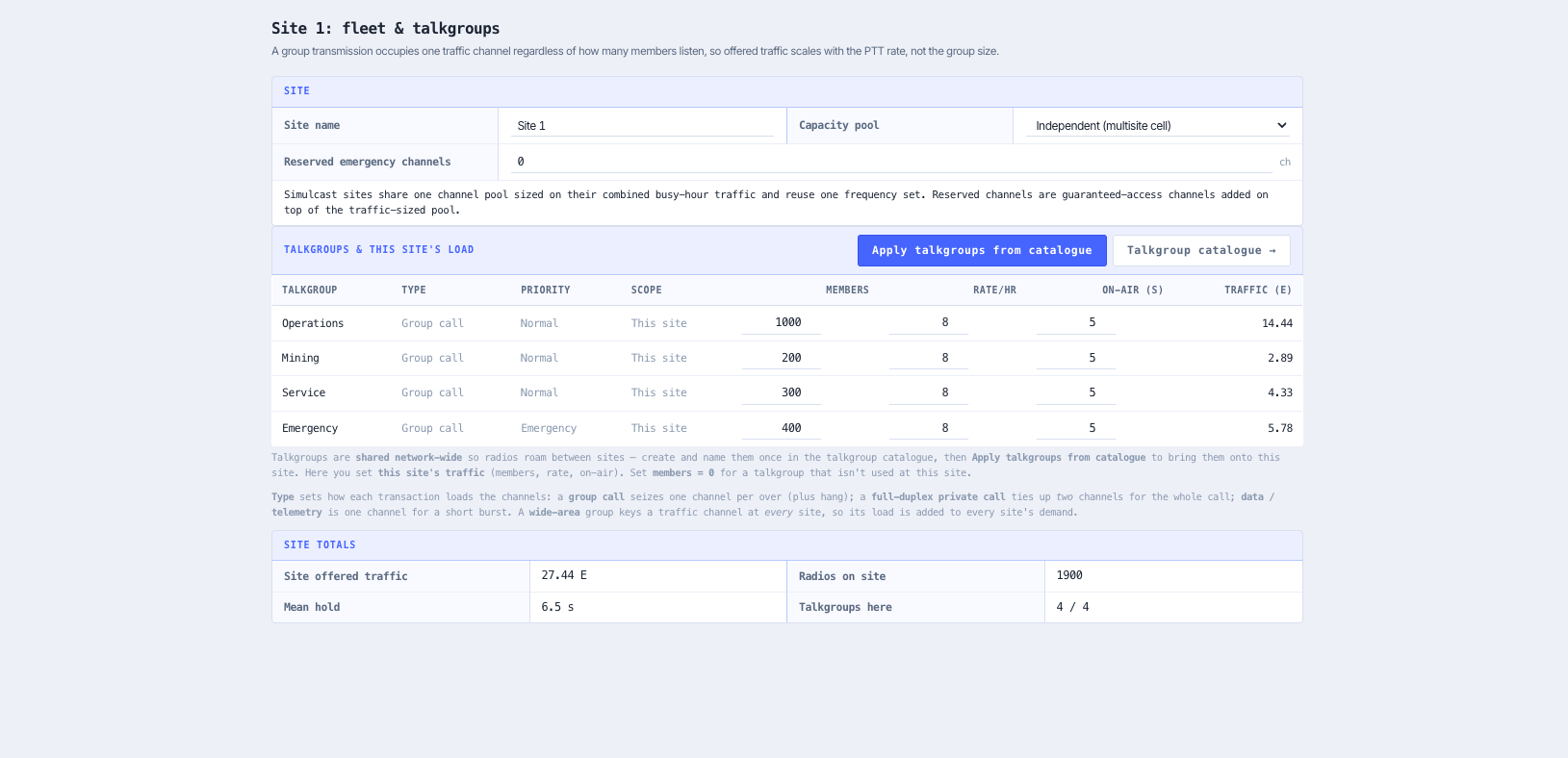
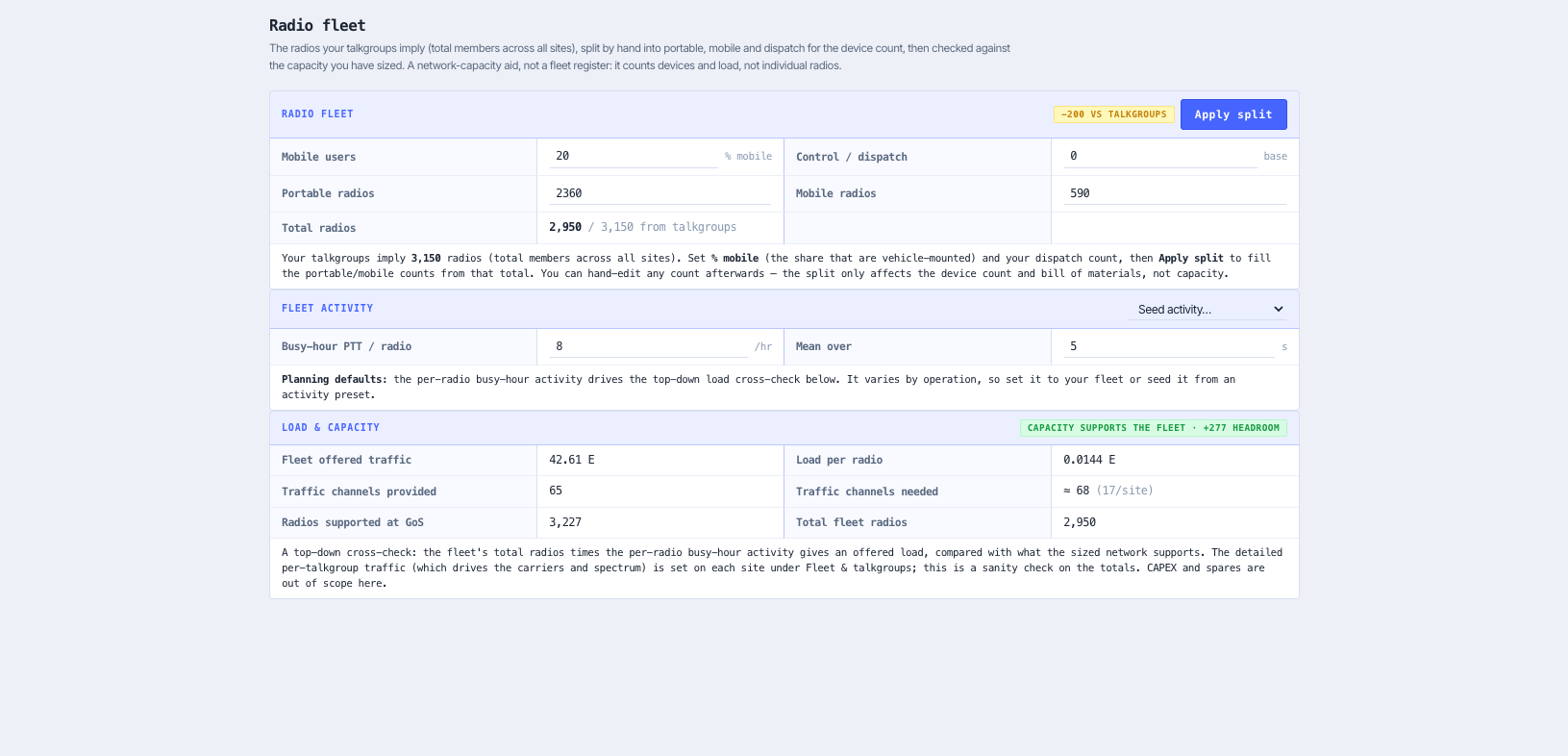
Talkgroups are described by member count, busy hour push to talk rate and mean over length. Offered traffic is built with the correct trunked model where a group transmission occupies one traffic channel regardless of listeners, so traffic scales with the push to talk arrival rate, not the group size. Planning default activity presets for mining, public safety, utility and transport seed sensible starting numbers and are clearly labelled and fully editable.

Transmission versus message trunking

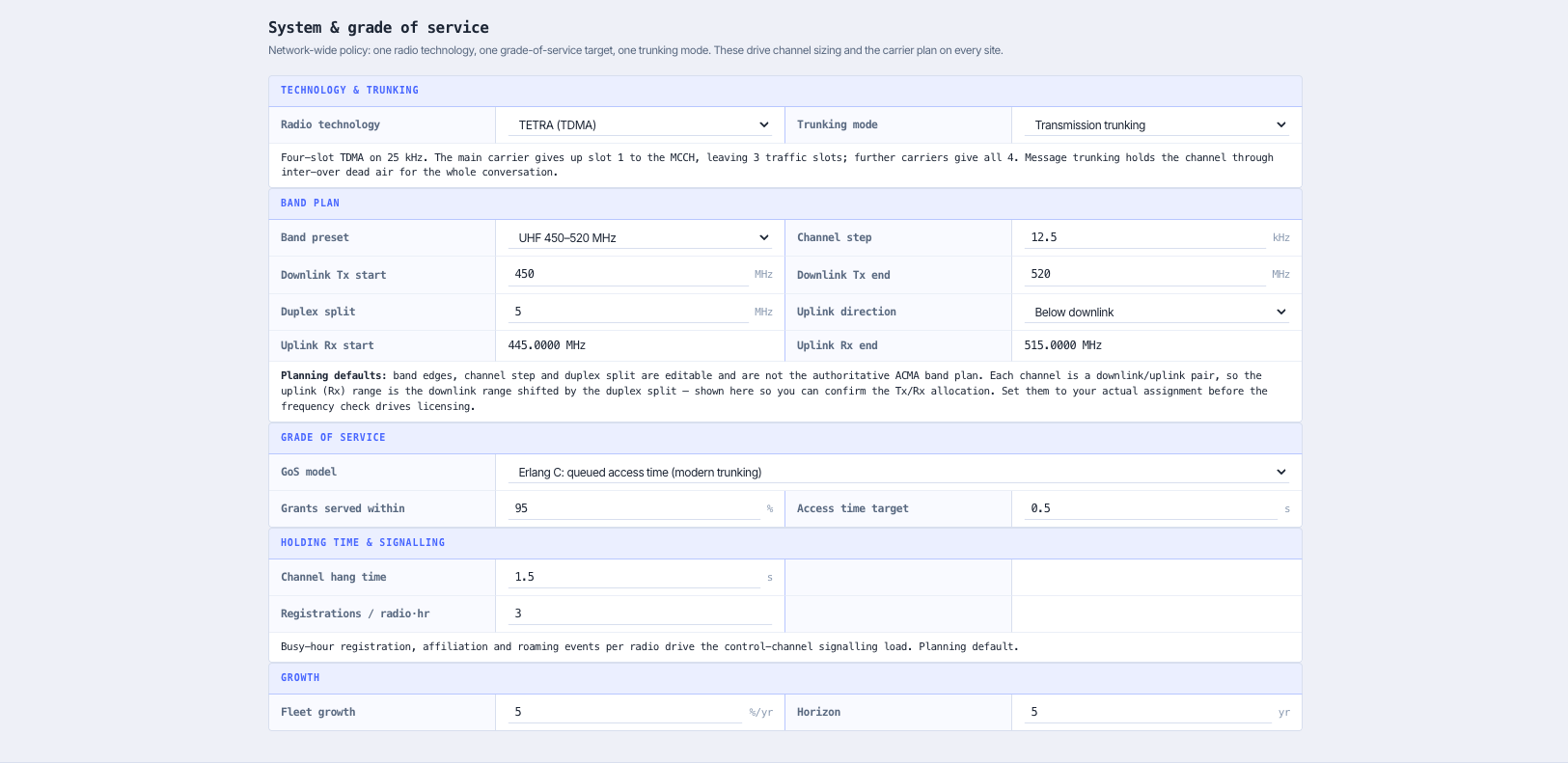
A system level trunking mode toggle models the real efficiency difference. Transmission trunking seizes and releases the channel per over. Message trunking holds the channel through the inter over dead air for the whole conversation, which is set from a mean overs per conversation and inter over gap. The holding time and channel occupancy update accordingly.

Access time grade of service

Trunked systems queue call grants, so the meaningful grade of service is an Erlang C access time target: the percentage of grants served within a target number of seconds. The planner solves the minimum channel count that meets it and reports the achieved figure, the probability a grant is queued, the average access delay and channel utilisation. Erlang B blocking is available for message trunked or no queue systems.

Technology aware carriers and spectrum

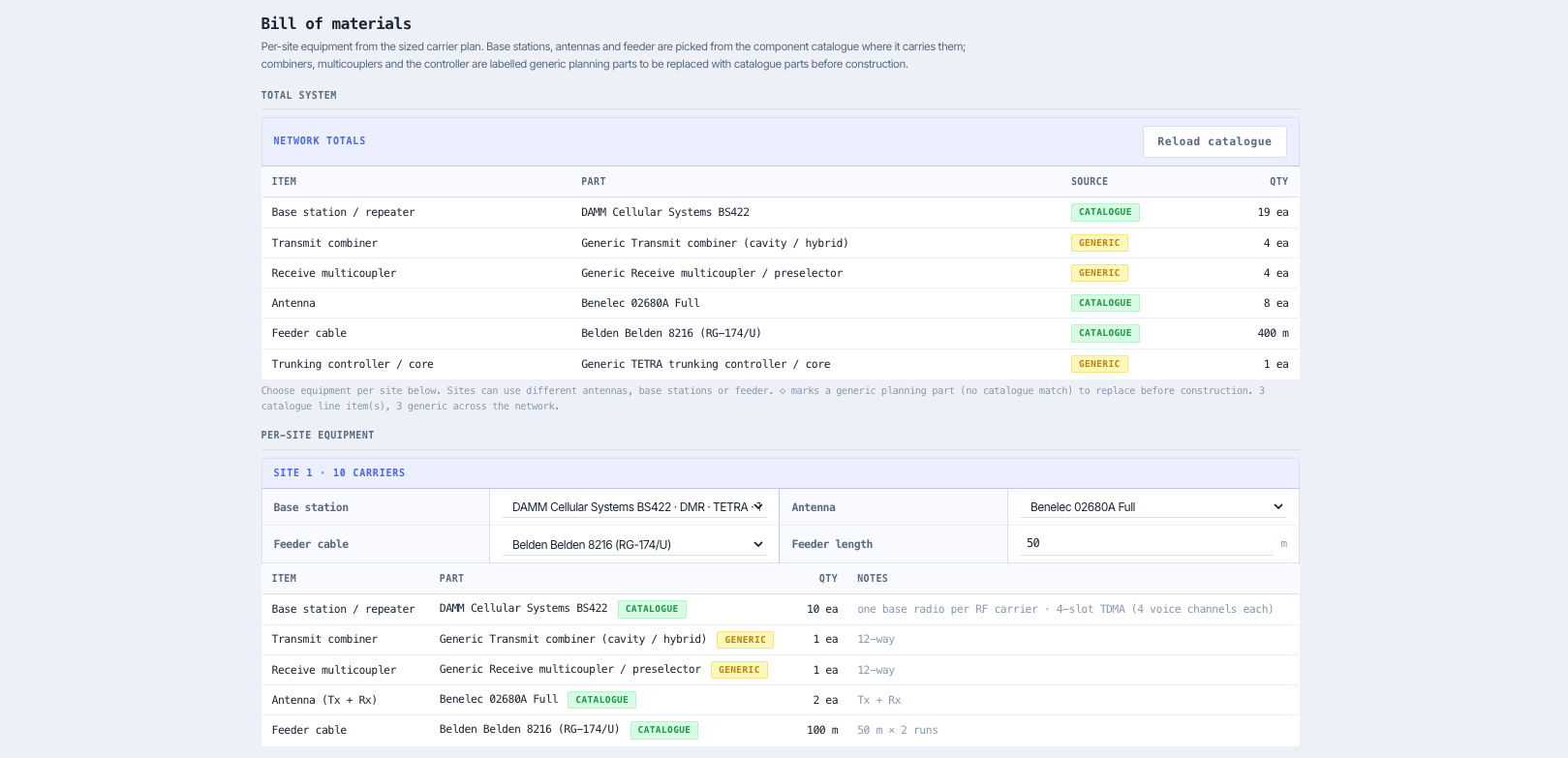
The required traffic channels are mapped onto real RF carriers and paired transmit and receive spectrum for each technology, including its control channel. P25 Phase 1 is FDMA with one carrier per channel plus a control carrier. P25 Phase 2 is two slot TDMA voice with an FDMA control carrier. DMR Tier III is two slot TDMA with a control timeslot. TETRA is four slot TDMA with the MCCH on the main carrier.

Multi site network with simulcast and multisite

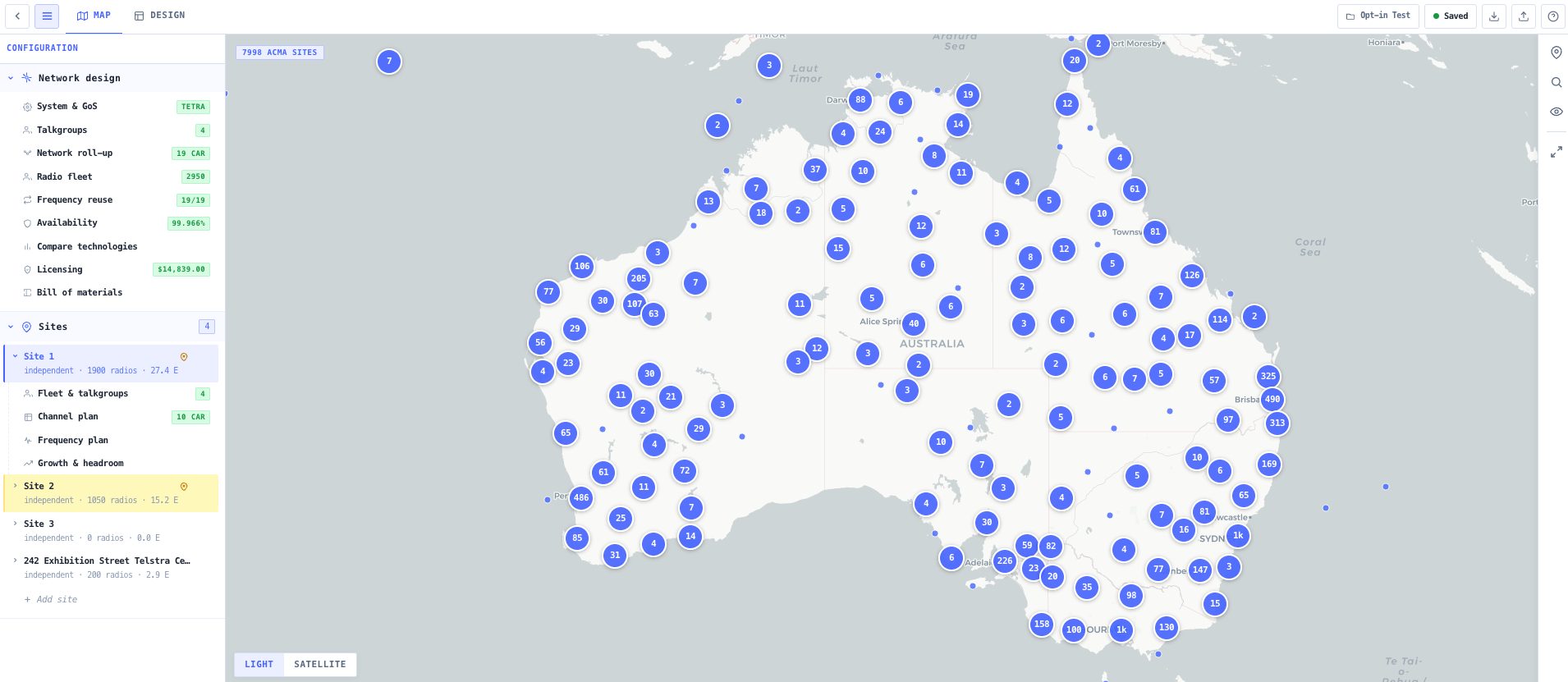
A project holds many sites. Independent multisite cells are each sized on their own traffic and need their own frequencies. Simulcast pools group sites that transmit the same carriers everywhere, so the pool is sized once on the combined busy hour traffic of its member sites and reuses one frequency set. The per site loading table and worst site flag show where the network is tight.

Distinct frequencies versus deployed carriers

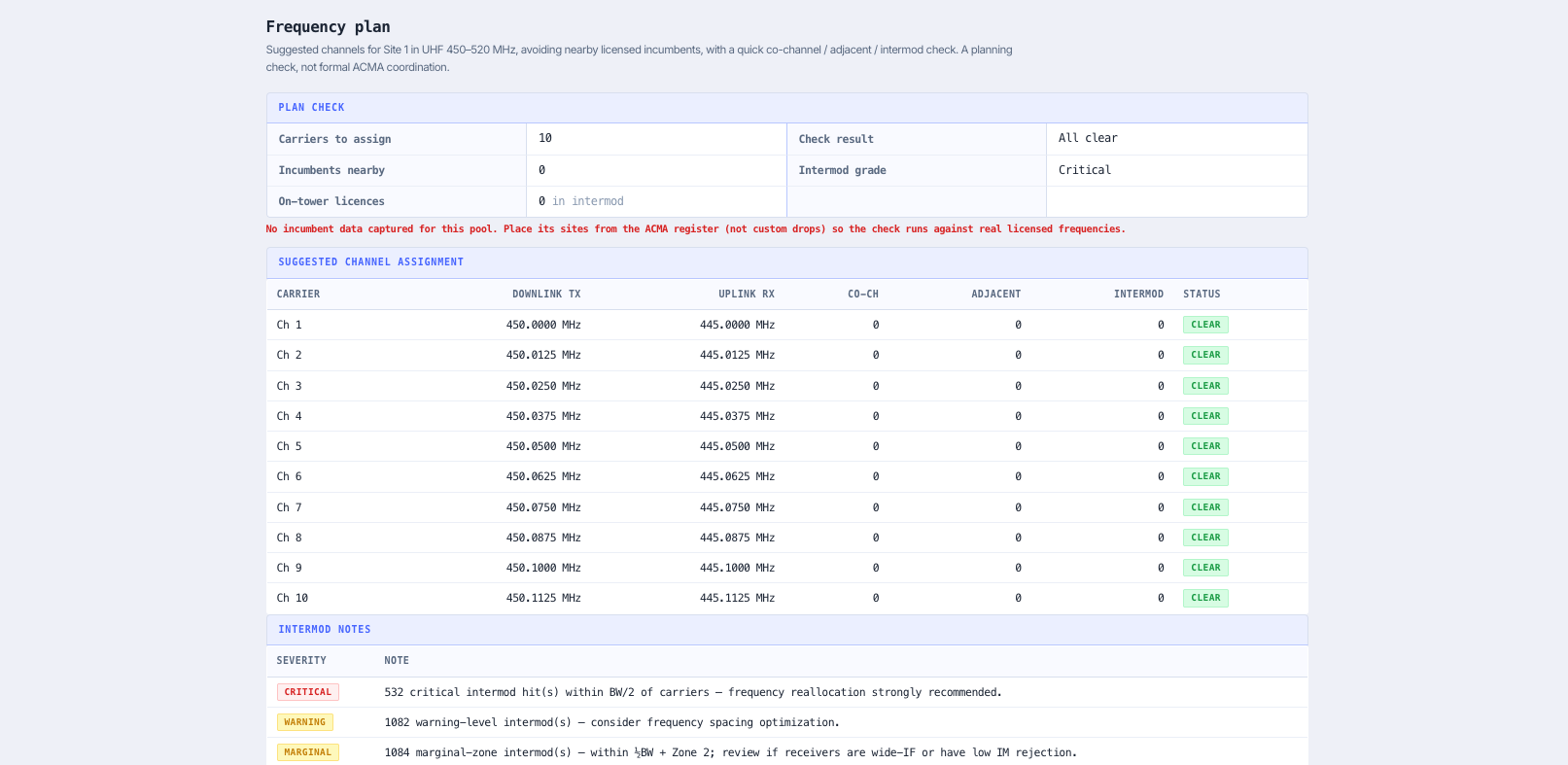
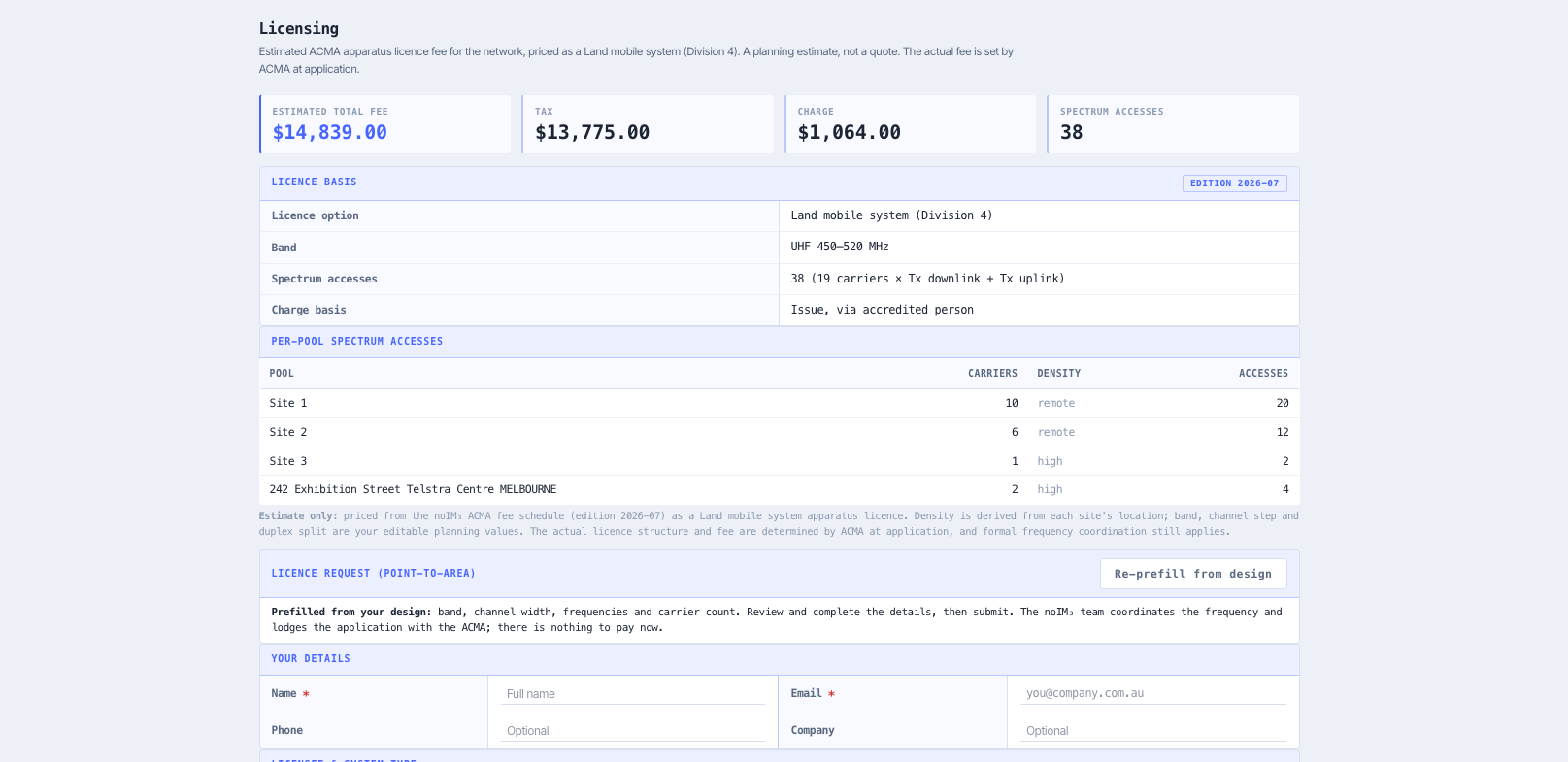
The network roll up separates the distinct frequency carriers to licence, counting each simulcast pool once, from the carriers physically deployed across every site. This is the figure a spectrum licence and an ACMA apparatus fee are driven by, and it is reported alongside the total paired spectrum for the distinct set.

Technology comparison

The same channel requirement is mapped onto all four technologies side by side, showing distinct carriers and paired spectrum for each. Because the channel count is technology independent and only the carrier structure differs, the comparison is a clean way to see the spectrum cost of P25 Phase 1 against Phase 2, DMR Tier III and TETRA for a given fleet.

Growth headroom

A growth rate and horizon project offered traffic forward. The tool reports the channels required at the horizon, the extra channels versus today, and the years of runway before today plan breaches its grade of service target, so a design can be checked for the design life rather than only the day it is built.

Standards & methodology

  • TIA-102 (P25 Phase 1 FDMA and Phase 2 TDMA)
  • ETSI TS 102 361 (DMR Tier III)
  • ETSI EN 300 392 (TETRA)
  • TIA TSB-88 grade of service and channel performance guidance
  • Erlang B and Erlang C traffic engineering (steady state busy hour)

When to use this tool

  • Sizing a P25 or DMR Tier III trunked network for a mine site across multiple pit and plant sites
  • Choosing between simulcast and independent multisite architecture for a regional network
  • Comparing P25 Phase 2 against TETRA for spectrum footprint on the same fleet
  • Working out the carriers and licensed spectrum to declare for an ACMA apparatus licence
  • Checking how many years a trunked channel plan lasts against projected fleet growth

Frequently asked questions

How is this different from the Erlang B and Erlang C calculators?

Those tools size one channel pool for a given offered traffic. This planner builds the offered traffic from a fleet of talkgroups, sizes the pool against a trunked grade of service, maps the channels onto real carriers and spectrum for a chosen technology, and distributes the whole thing across a multi site network. It uses the same Erlang engines underneath rather than duplicating them.

Why does group size not multiply the traffic?

In trunked land mobile radio a group transmission occupies one traffic channel regardless of how many members are listening. Offered traffic therefore scales with the push to talk arrival rate, which the member count drives, not with the number of listeners. Multiplying by group size is a common and large sizing error that this tool avoids.

What is the difference between a simulcast pool and independent multisite cells?

A simulcast pool has every member site transmit the same carriers simultaneously, so the pool is sized once on the combined traffic of all its sites and reuses one frequency set everywhere. Independent multisite cells are separate trunked systems, each sized on its own traffic and each needing its own frequencies. The tool sizes both and separates distinct licensed frequencies from deployed carriers in the roll up.

How accurate is the sizing?

It is defensible planning grade. The Erlang models are steady state busy hour models that assume Poisson arrivals and exponential holding, valid for capacity planning rather than short timescale burst behaviour. Erlang C assumes an infinite queue with no caller abandonment, so its access delay is a conservative upper bound. The activity presets are clearly labelled planning defaults meant to be replaced with measured busy hour data.

Does it plan frequencies or predict coverage?

No. It emits the carrier count and spectrum a network needs, which feeds frequency coordination and licensing, but it does not assign specific channels or predict RF coverage. Coverage and site footprints are the job of the coverage planning tools; this planner sizes capacity.