What is RF interference?
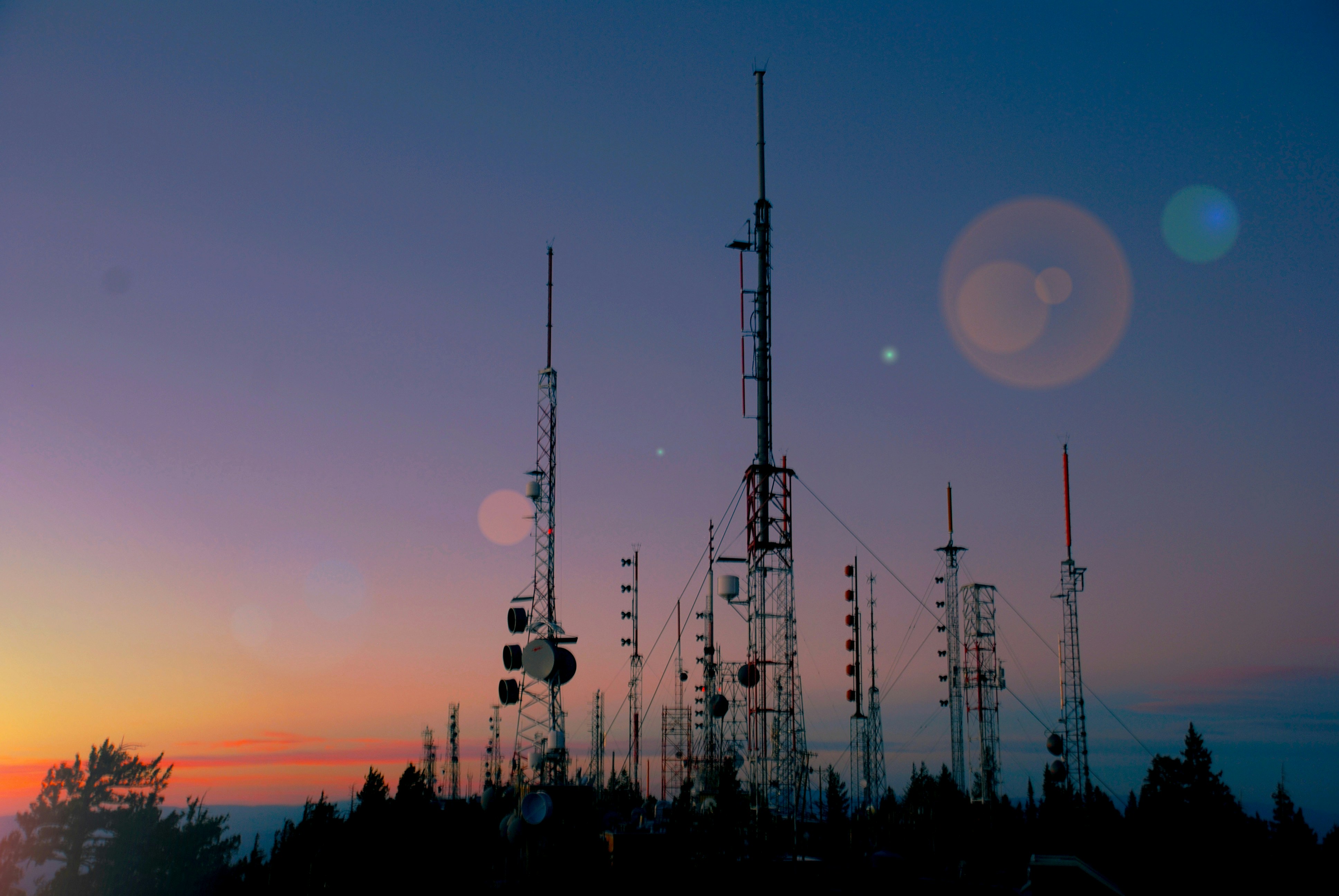
Radiofrequency (RF) interference occurs when unwanted signals disrupt the normal operation of a wireless communication system. In plain terms, it happens when one signal gets in the way of another, reducing performance, causing data loss, or, in severe cases, making communication impossible. It can affect almost any wireless service, from mobile phone networks and Wi-Fi to satellite communications, broadcast systems, and the public safety and emergency radios that people depend on in a crisis.
At its core, RF interference is a spectrum-sharing problem: multiple systems trying to operate in the same or adjacent frequency space at the same time. Almost everything else in this article is a consequence of that single fact, made steadily worse as more systems crowd into the same finite resource.
The role of the ACMA in managing interference
In Australia, the ACMA is responsible for managing spectrum access and investigating interference when it arises. That role spans defining frequency allocations and band plans, enforcing emission limits and technical standards, investigating complaints of harmful interference, coordinating between services when their needs conflict, and maintaining compliance across both licensed and unlicensed spectrum.
This regulatory layer is easy to take for granted, but without it wireless systems would quickly degrade into unmanaged chaos, particularly in the dense urban environments where the most services compete for the same airspace.
The main types of RF interference
RF interference is not a single phenomenon. Engineers generally sort it into a handful of categories, each with its own cause and its own cure.
Co-channel interference
This occurs when two transmitters operate on the same frequency. It is common in cellular networks and other shared-spectrum environments, where the same channel is deliberately reused across different locations and occasionally reaches further than intended.
Adjacent-channel interference
This happens when a strong signal bleeds into a nearby frequency channel because filtering is imperfect. The offending transmitter may be entirely legal on its own channel, yet still spill enough energy into its neighbour to degrade it.
Intermodulation interference
When several strong signals mix in a nonlinear device, such as an amplifier or a receiver front end, they generate new, unwanted frequencies that were never deliberately transmitted. Those intermodulation products can land squarely on a channel you care about.
Broadband noise and spurious emissions
This category covers wide-spectrum noise from devices, poorly designed transmitters, or simply malfunctioning equipment. Rather than affecting one channel, it lifts the noise floor across a whole swathe of spectrum.
External environmental interference
Finally, there are natural and incidental sources that have nothing to do with communications at all, including industrial machinery, power lines, electric vehicles, and, in some bands, solar activity.
Why RF interference is getting worse
RF interference is not new, but its frequency, complexity, and impact are all rising sharply. Several trends are driving that, and they compound one another rather than acting in isolation.
The first is simple crowding. More systems than ever are competing for limited frequency space: 5G and emerging 6G infrastructure, massive IoT deployments, Wi-Fi pushing into high-density environments, and a growing population of satellite constellations and ground stations. Even when every one of these operates entirely legally, they now sit closer together in both frequency and geography than they ever used to.
The second is the saturation of unlicensed spectrum. Bands like 2.4 GHz and 5 GHz are now shared by Wi-Fi routers, Bluetooth devices, smart-home systems, and industrial IoT sensors, all at once and with no coordination between them. The predictable result is unpredictable performance, especially in built-up areas.
The third is network densification. Modern networks lean on small cells, repeaters, and indoor distributed systems to lift coverage and capacity. That helps, but it also multiplies the number of RF emitters packed into the same physical space, which raises the probability of interference even as it improves the signal.
The fourth is sheer device proliferation. The number of connected devices per person has climbed dramatically, from smartphones and wearables to sensors and connected vehicles, and each one is a potential RF source, many of them transmitting continuously rather than occasionally.
The fifth is the long tail of legacy equipment. Older infrastructure continues to operate alongside modern networks, often in adjacent bands, with less efficient modulation and less precise filtering. That creates coexistence challenges that are difficult to design out and slow to disappear, because the old equipment cannot simply be switched off.
Why interference is harder to solve today
It might seem that better tools would make interference easier to handle, and in some respects they do. The environment, however, has grown harder faster than the tools have improved. Systems are more complex, with multi-band and multi-antenna designs interacting in ways that are difficult to predict. Urban RF environments overlap heavily, real-world spectrum usage is hard to observe directly, network behaviour is increasingly dynamic in mobile and IoT systems, and regulatory constraints limit how quickly spectrum can be reallocated or bands rearranged.
In short, the RF environment is now dynamic, layered, and constantly shifting, which means any static picture of it is out of date almost as soon as it is drawn.
The engineering impact
For RF engineers, interference is no longer a rare edge case but a core design constraint that touches almost every decision. It feeds into link budgets and fade margins, the choice of modulation and coding scheme, antenna placement and isolation, filtering and front-end architecture, and network-level frequency-reuse planning. Designing without accounting for interference risk is simply no longer viable in modern deployments, because the clean spectrum that such a design quietly assumes does not exist in the field.
How engineers can mitigate RF interference
Interference cannot be eliminated, but it can be managed through disciplined engineering. In practice that means:
- careful frequency planning and coordination
- improved filtering and RF front-end design
- directional antennas and deliberate isolation between systems
- dynamic spectrum management where it is available
- interference modelling during the early design phases, not after commissioning
- continuous monitoring and adaptive tuning of the live network
The goal is not perfection but resilience: systems that keep working under spectrum pressure rather than ones that assume the pressure away.
How noIM₃ fits in
At noIM₃, we focus on making RF interference management more predictable and less manual. Our tools help engineers identify potential interference risks before deployment, analyse frequency compatibility across complex environments, automate compliance checks against regulatory requirements, and reduce the uncertainty in spectrum planning decisions. By building this intelligence into the design workflow, interference risk becomes something that can be anticipated and engineered around, rather than diagnosed after it has already caused a problem.
Key takeaway
RF interference is no longer an occasional technical issue. It is a structural feature of modern wireless environments, and it is here to stay. As spectrum becomes more densely used, the challenge shifts from avoiding interference entirely to designing systems that can operate reliably in spite of it.
The future of RF engineering will not be defined by clean spectrum, because clean spectrum is increasingly a thing of the past. It will be defined by how well we can build systems that thrive in complex, shared, and increasingly constrained environments.